Overall rating (best variant)
Safety ratings
2026 HYUNDAI IONIQ 9 SUV BEV AWD
- Lane departure warningNo
- Forward collision warningNo
- Electronic stability controlStandard
2026 HYUNDAI IONIQ 9 SUV BEV RWD
- Lane departure warningNo
- Forward collision warningNo
- Electronic stability controlStandard
Crash test videos & photos
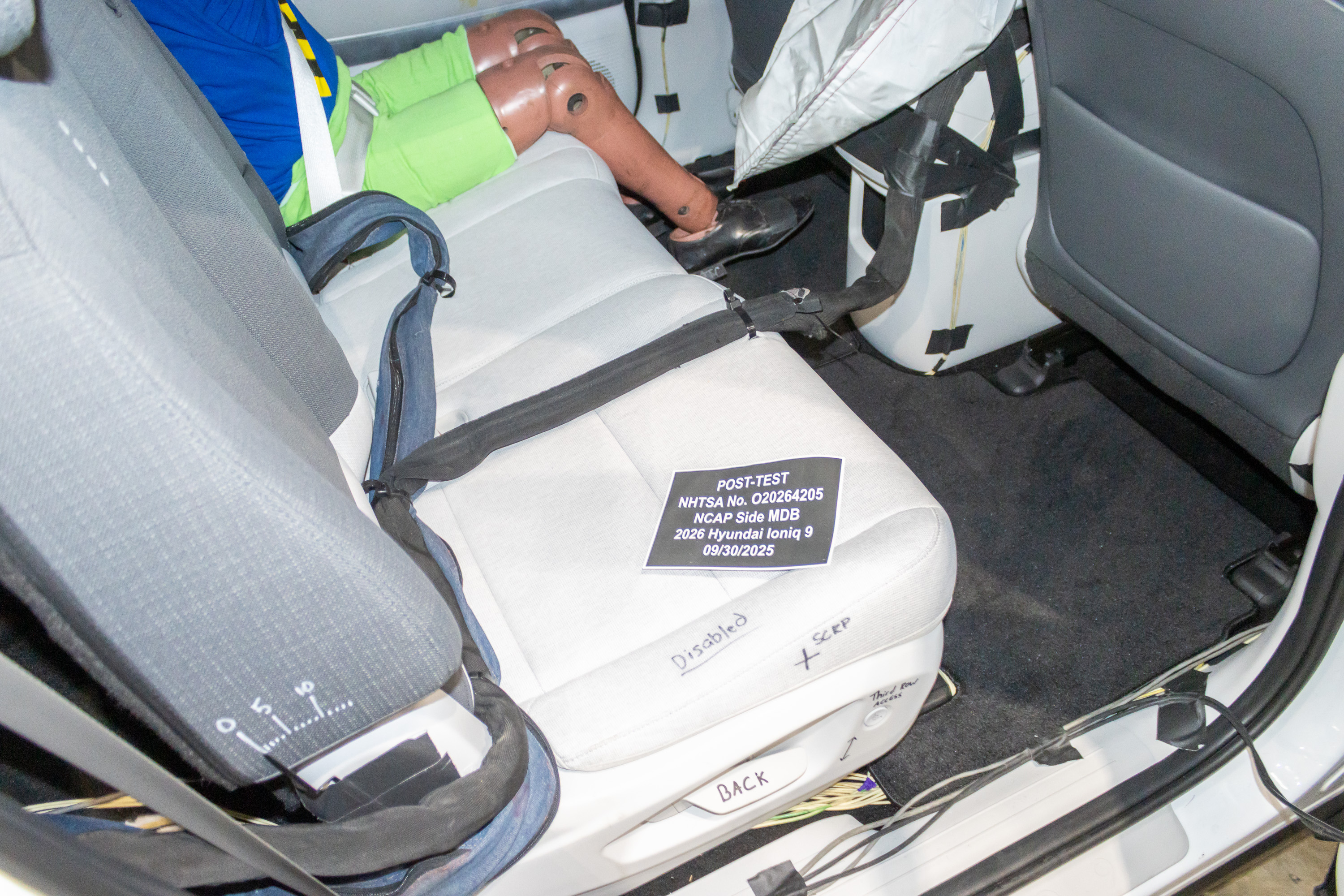
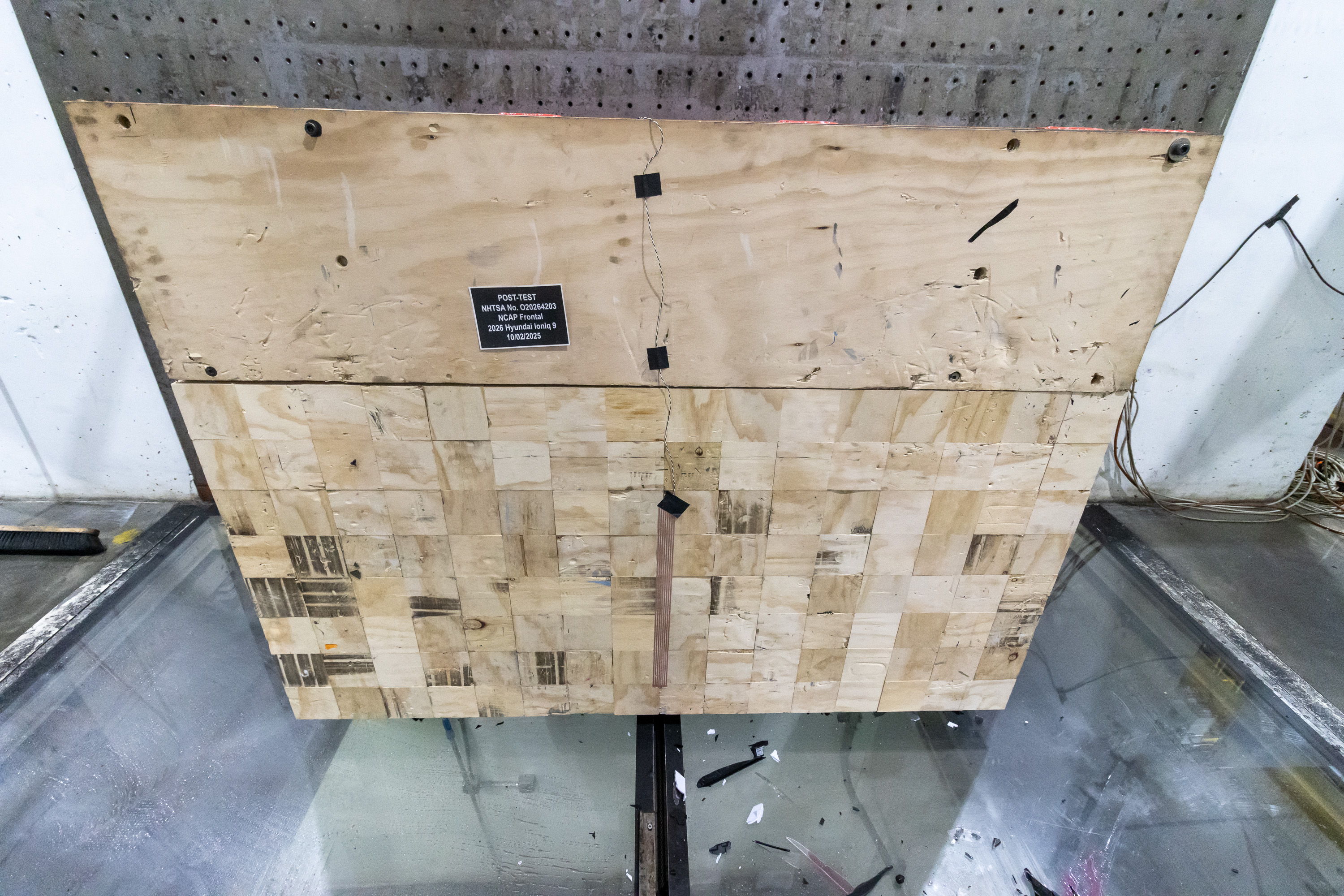
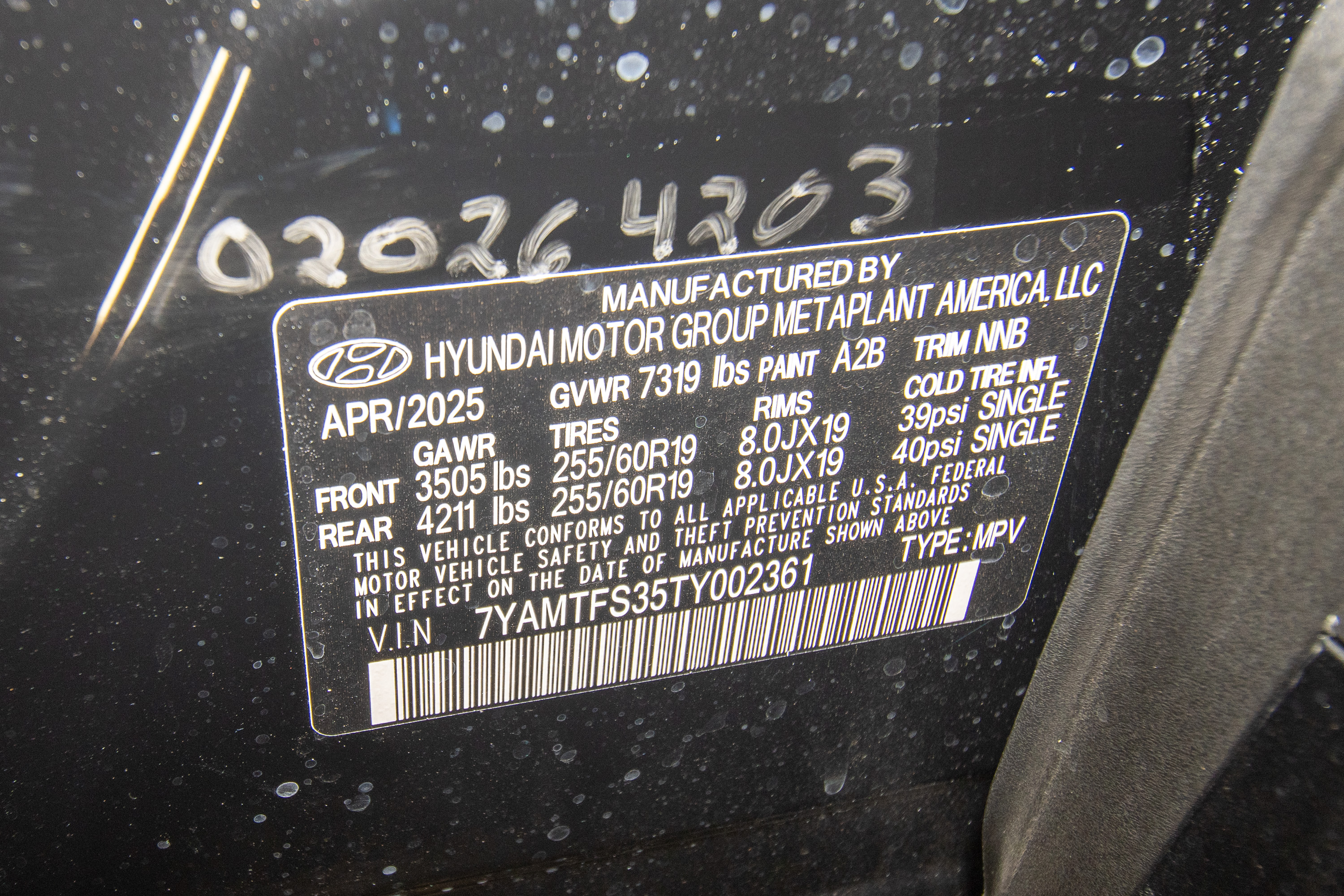
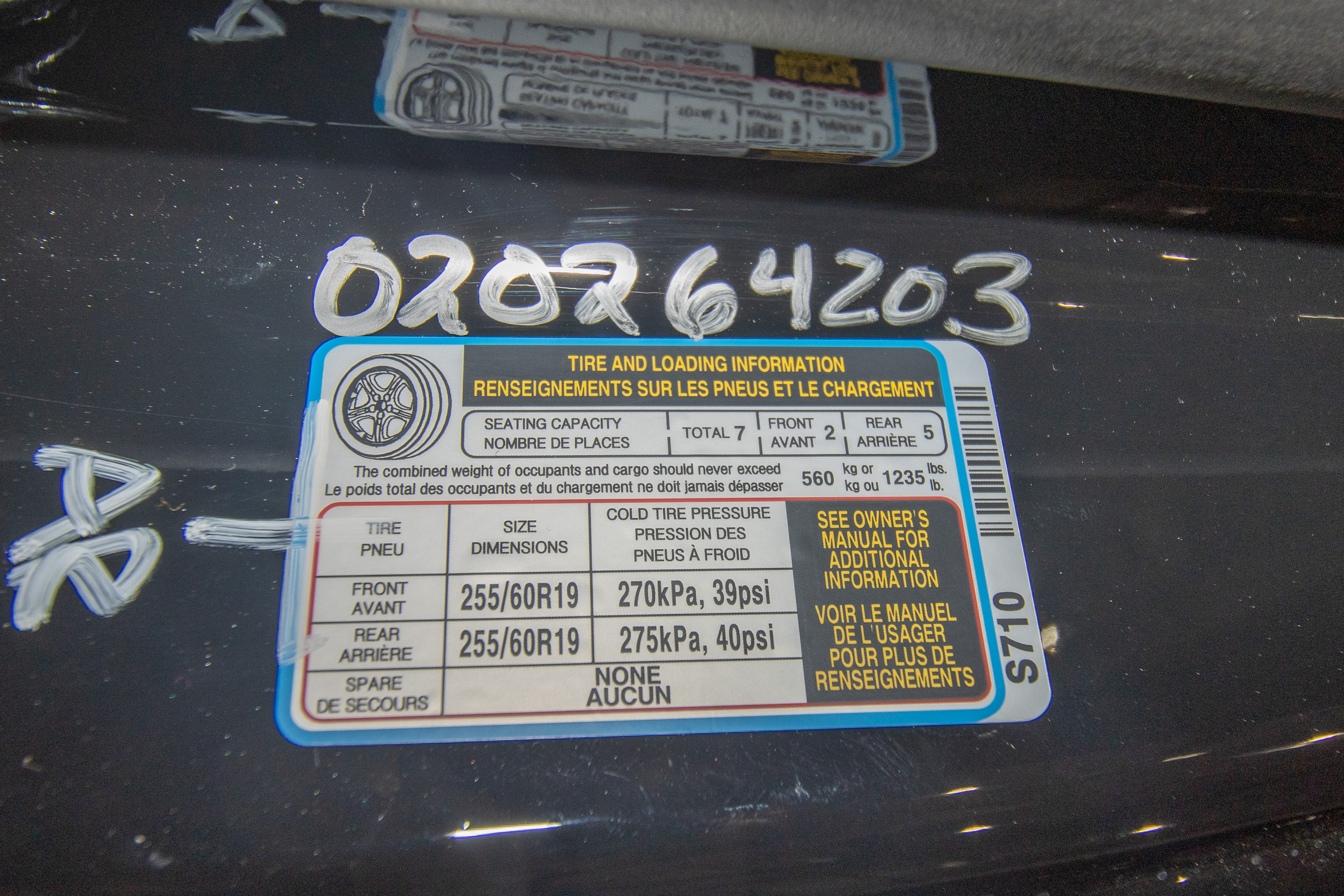
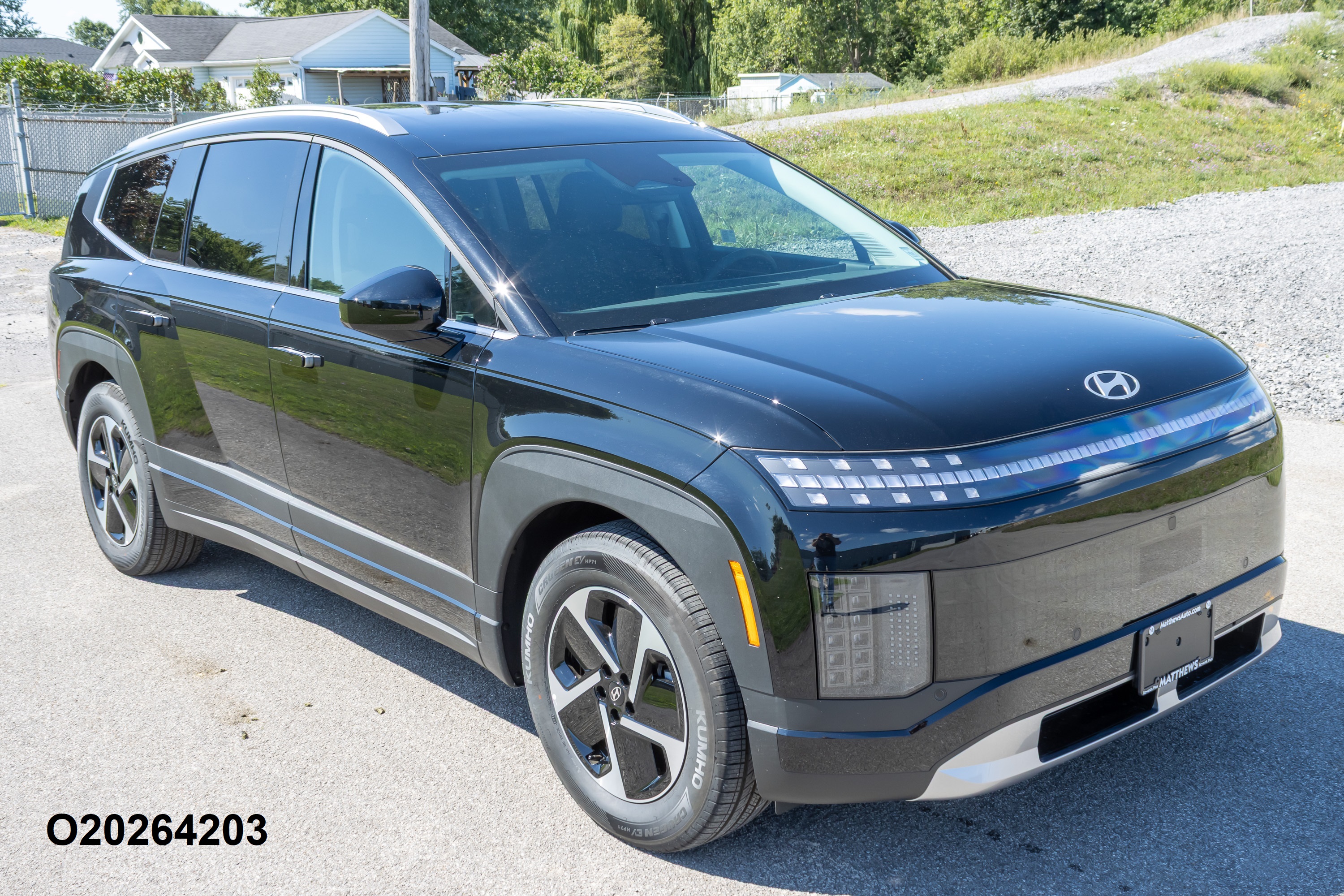
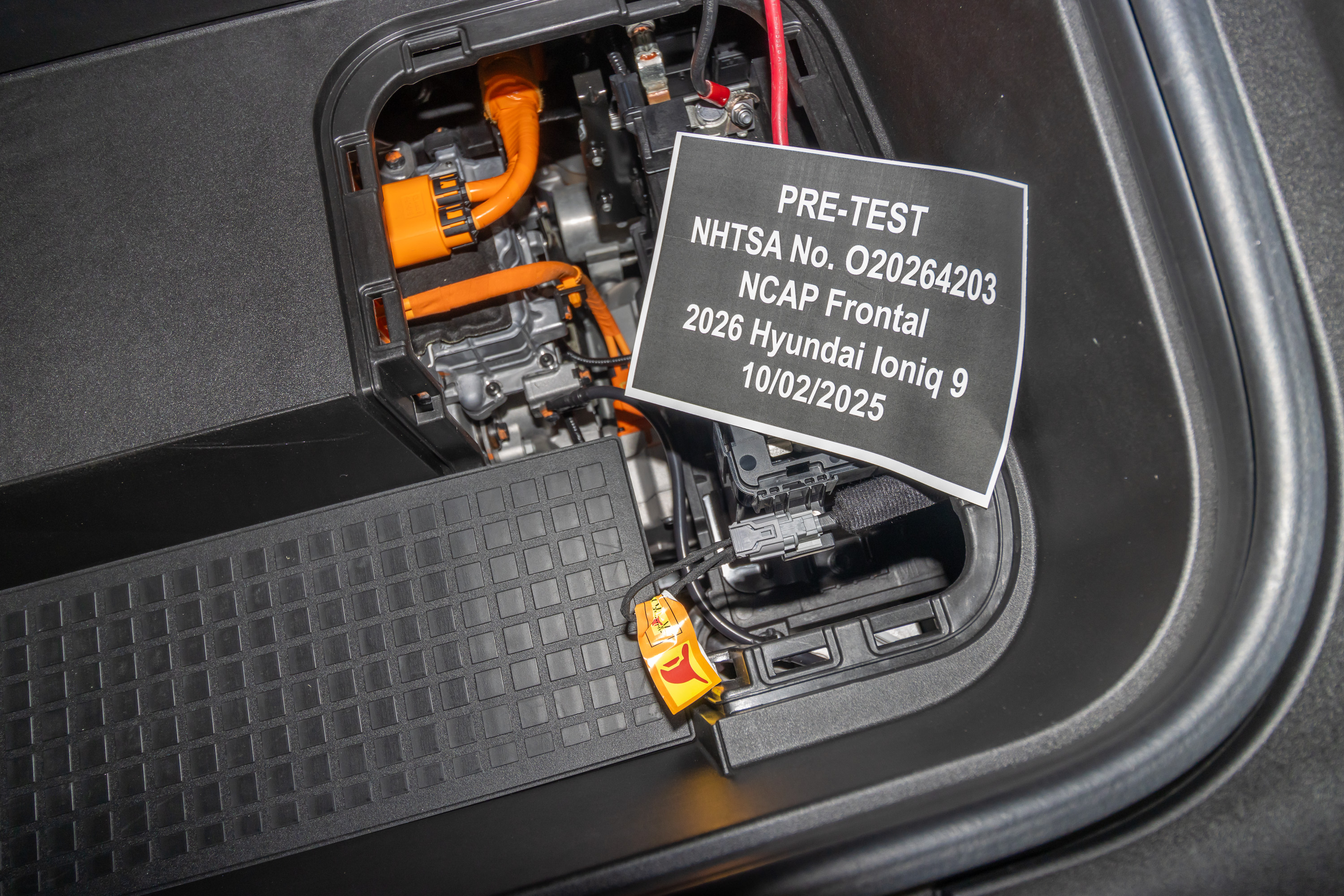
Crash test #1NHTSA test 15517
Full test report (PDF) ↗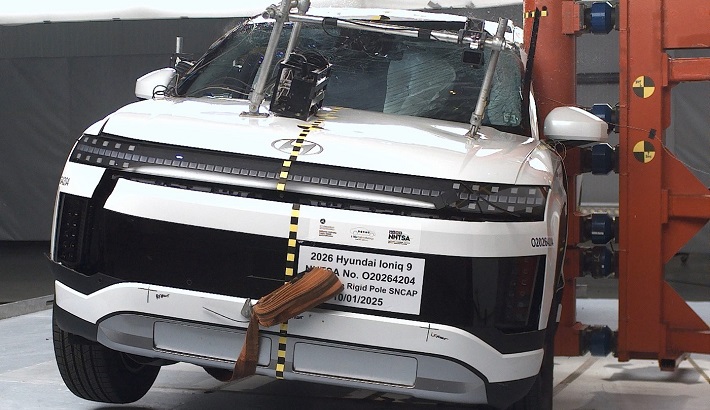
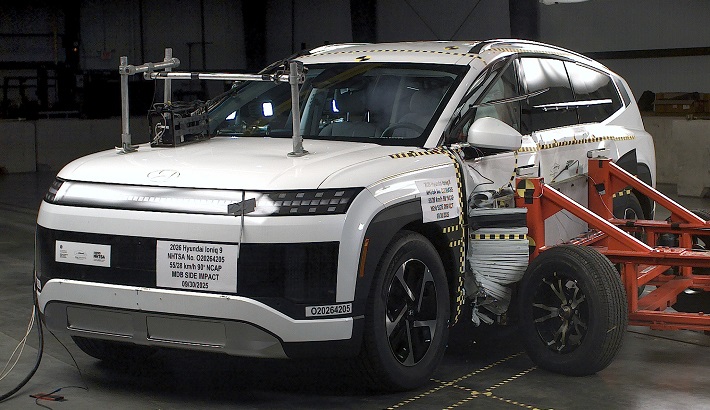
Crash test #2NHTSA test 15518
Full test report (PDF) ↗Crash-test footage is converted for smooth playback the first time someone requests it — usually under a minute.
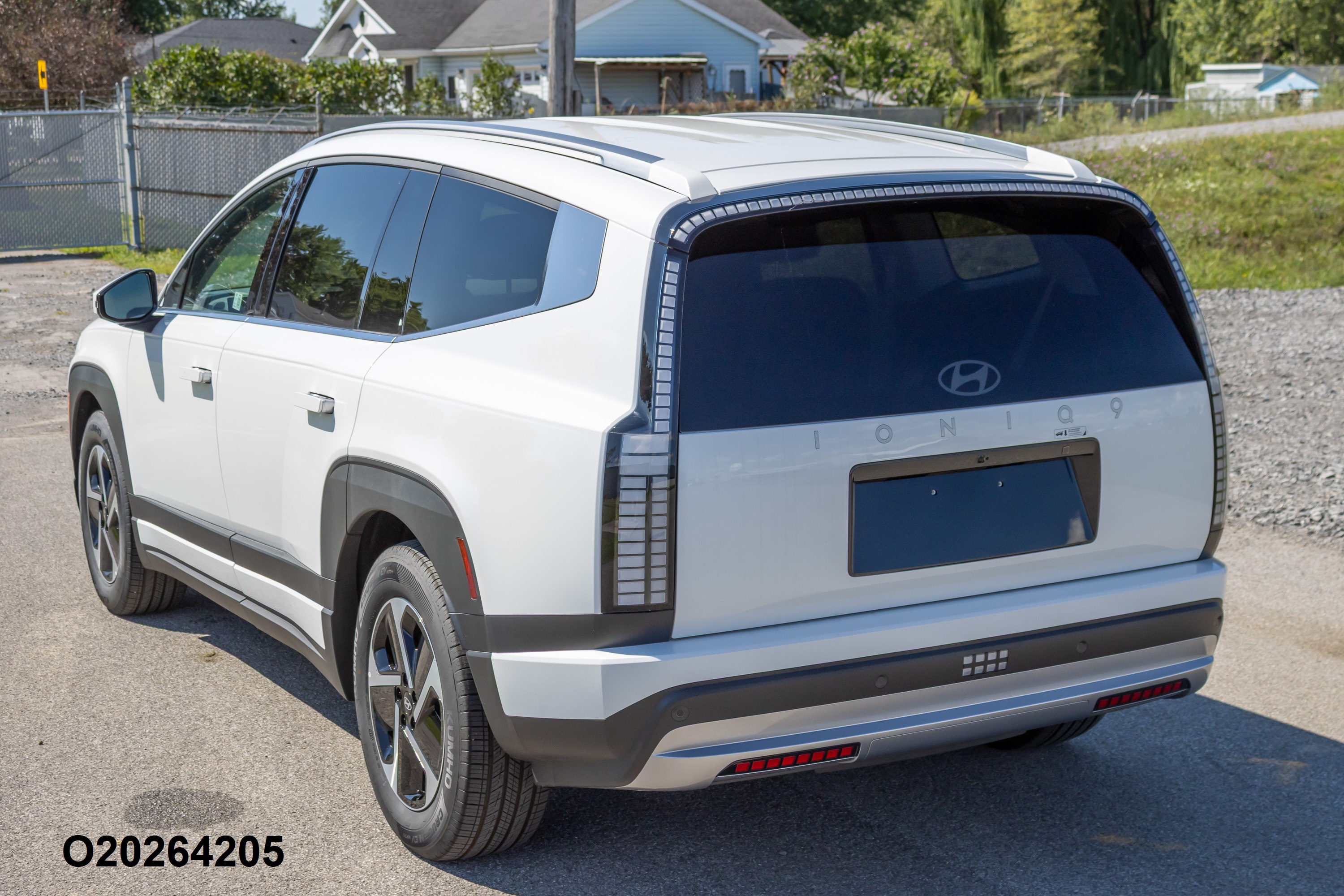
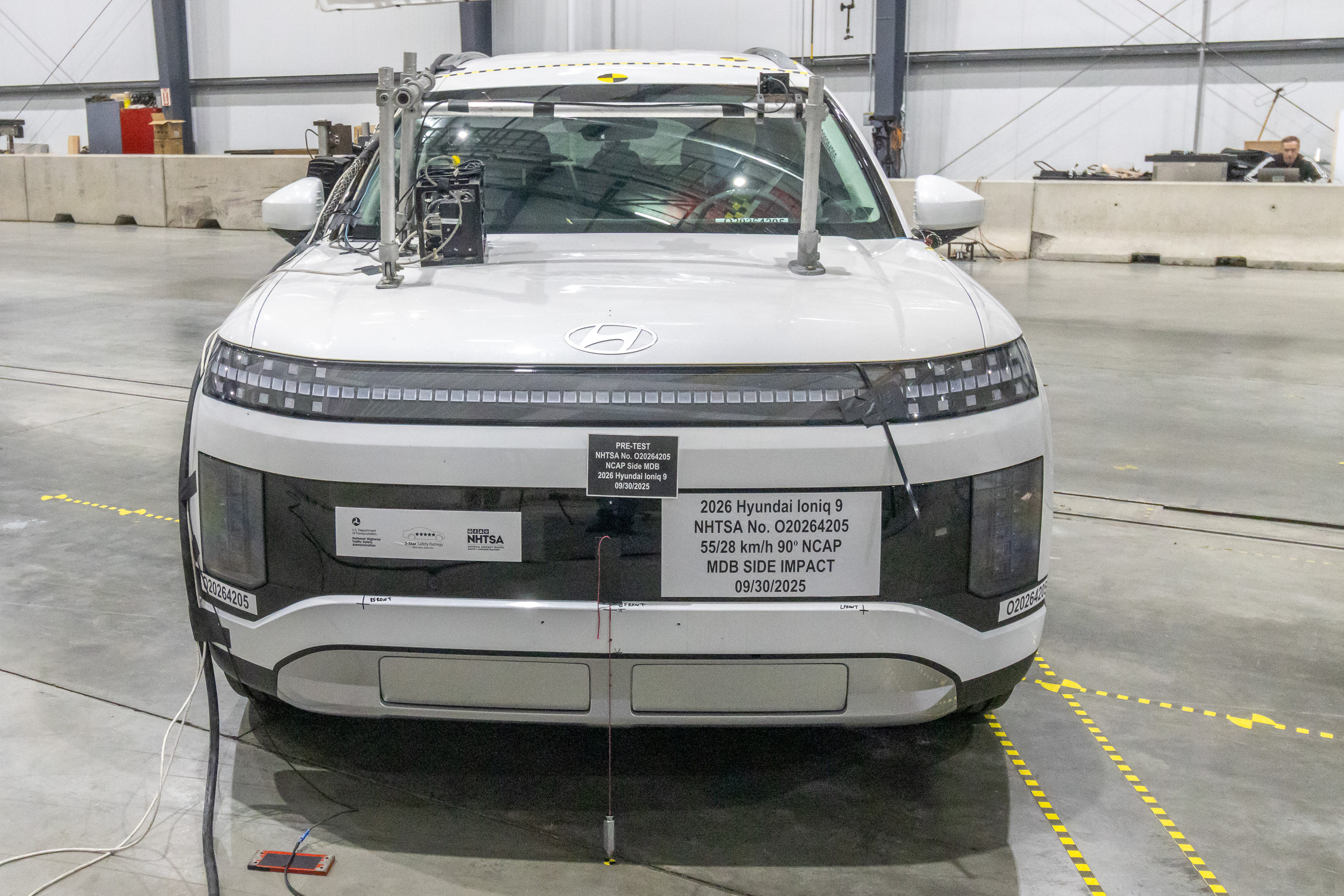
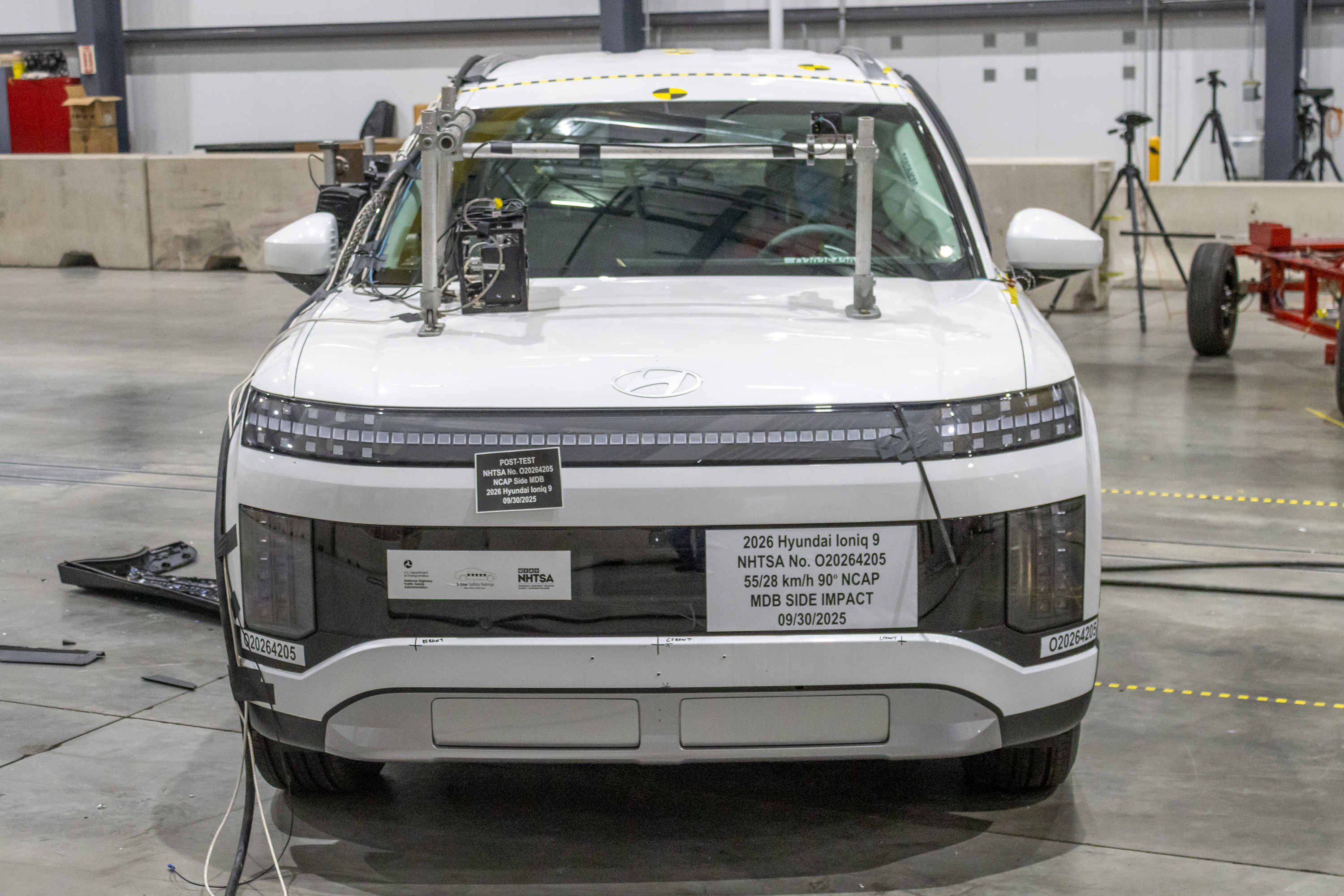
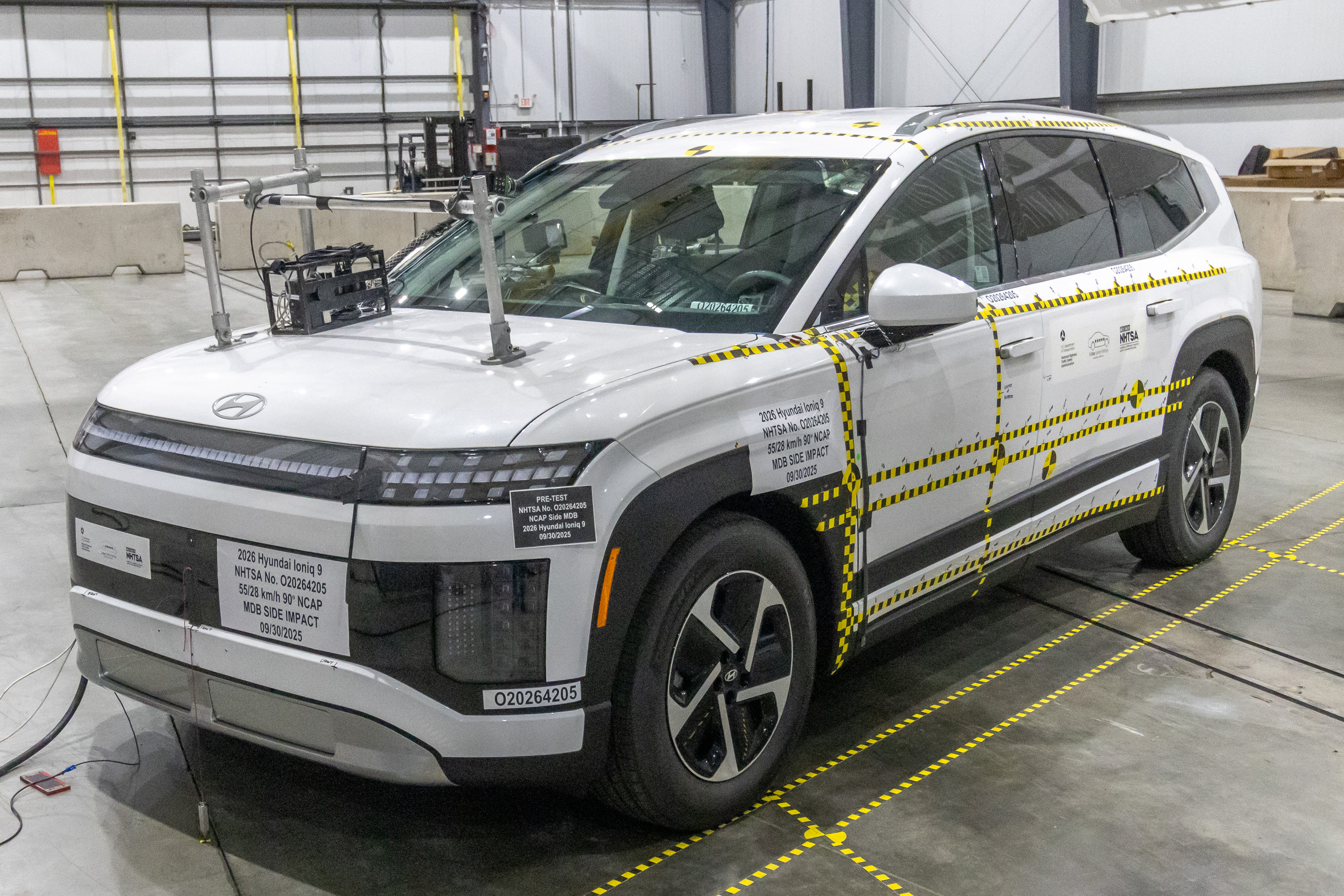
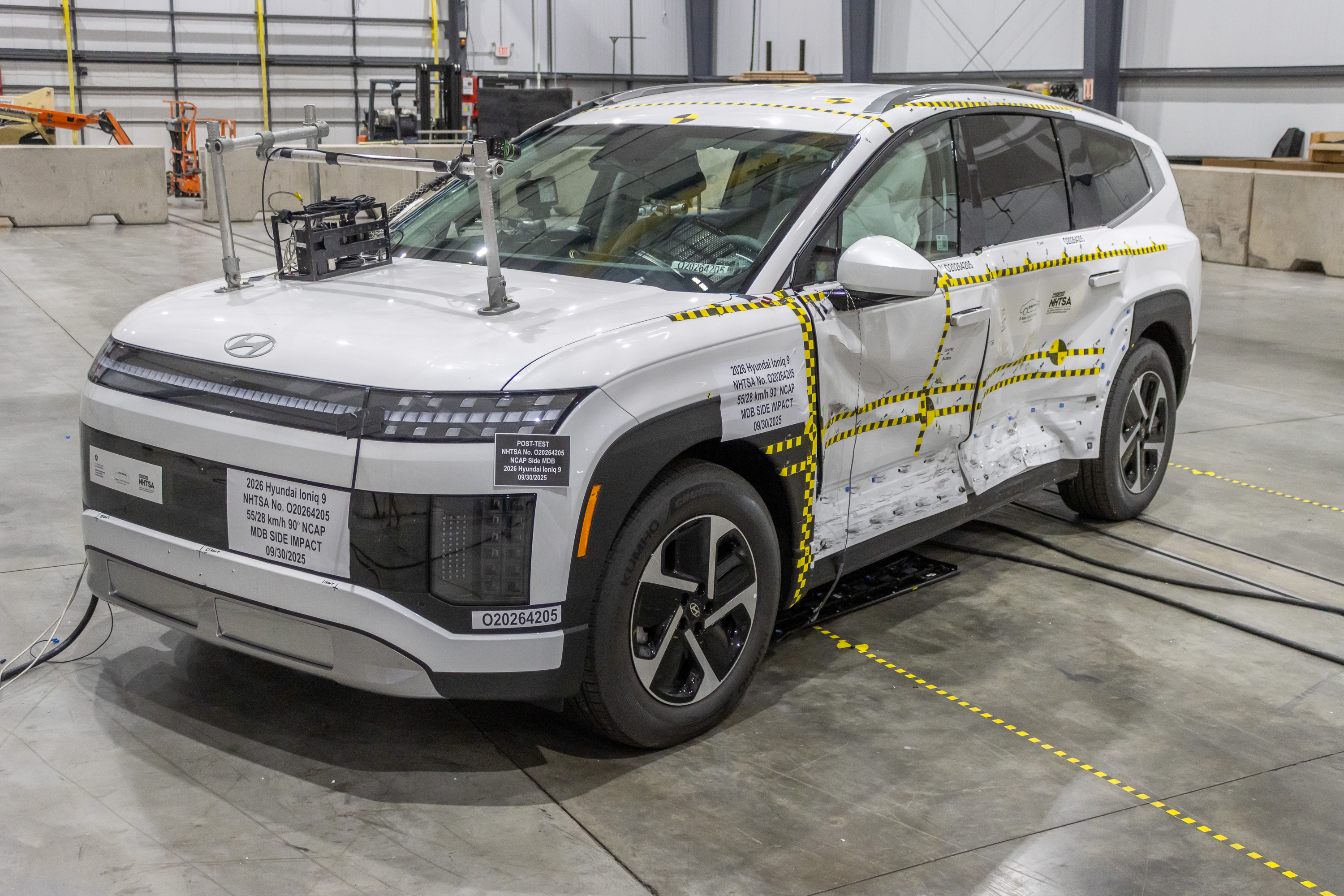
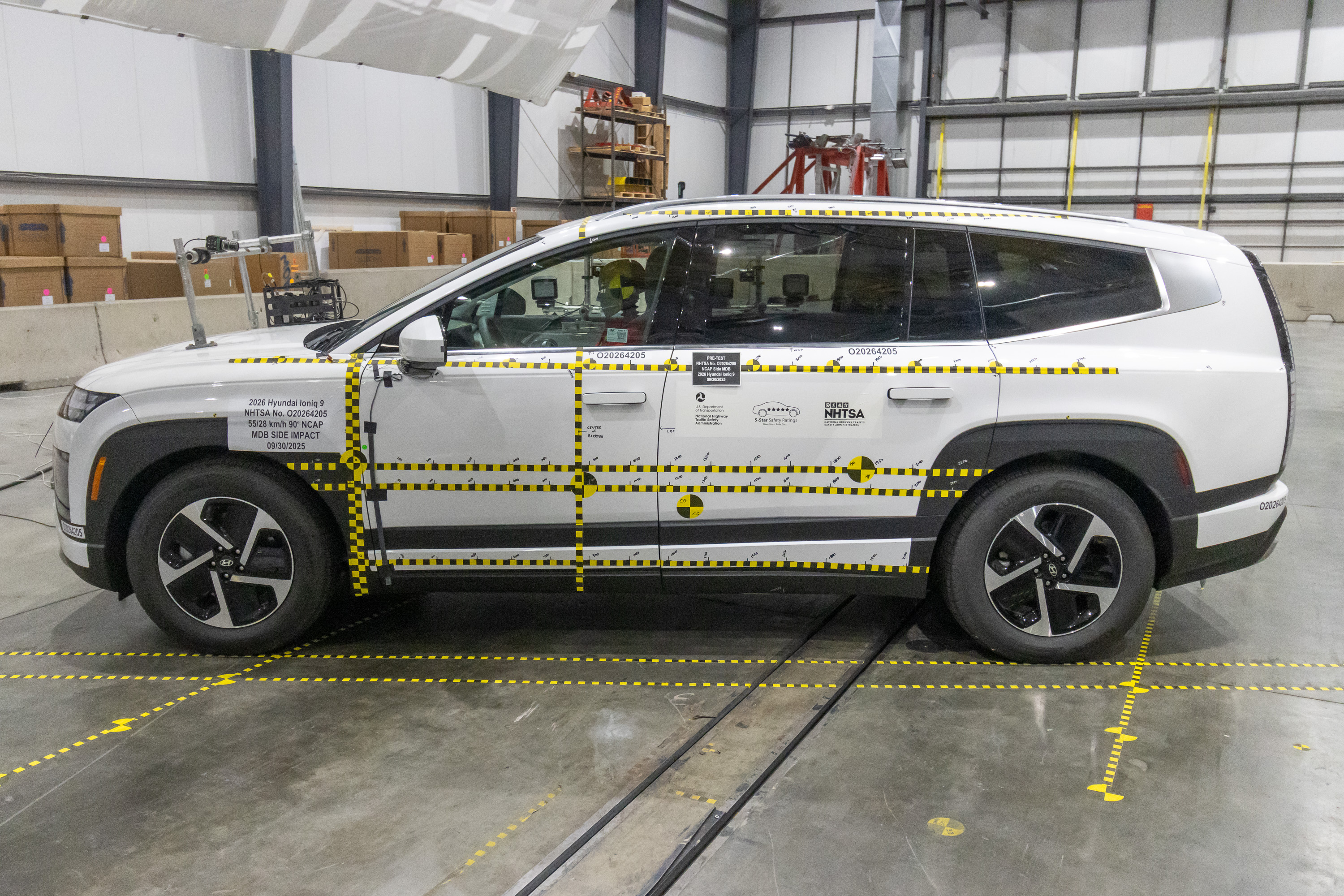
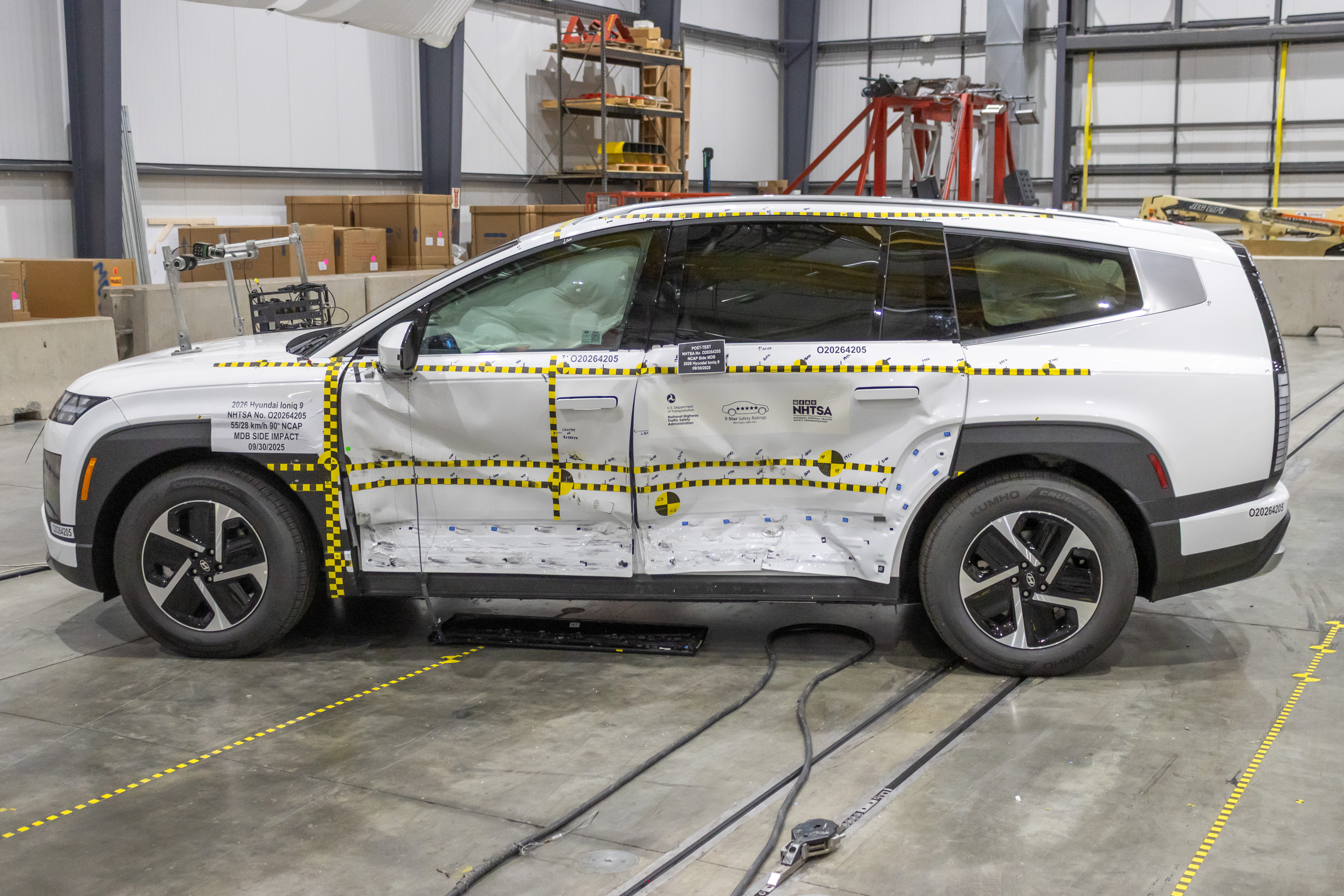
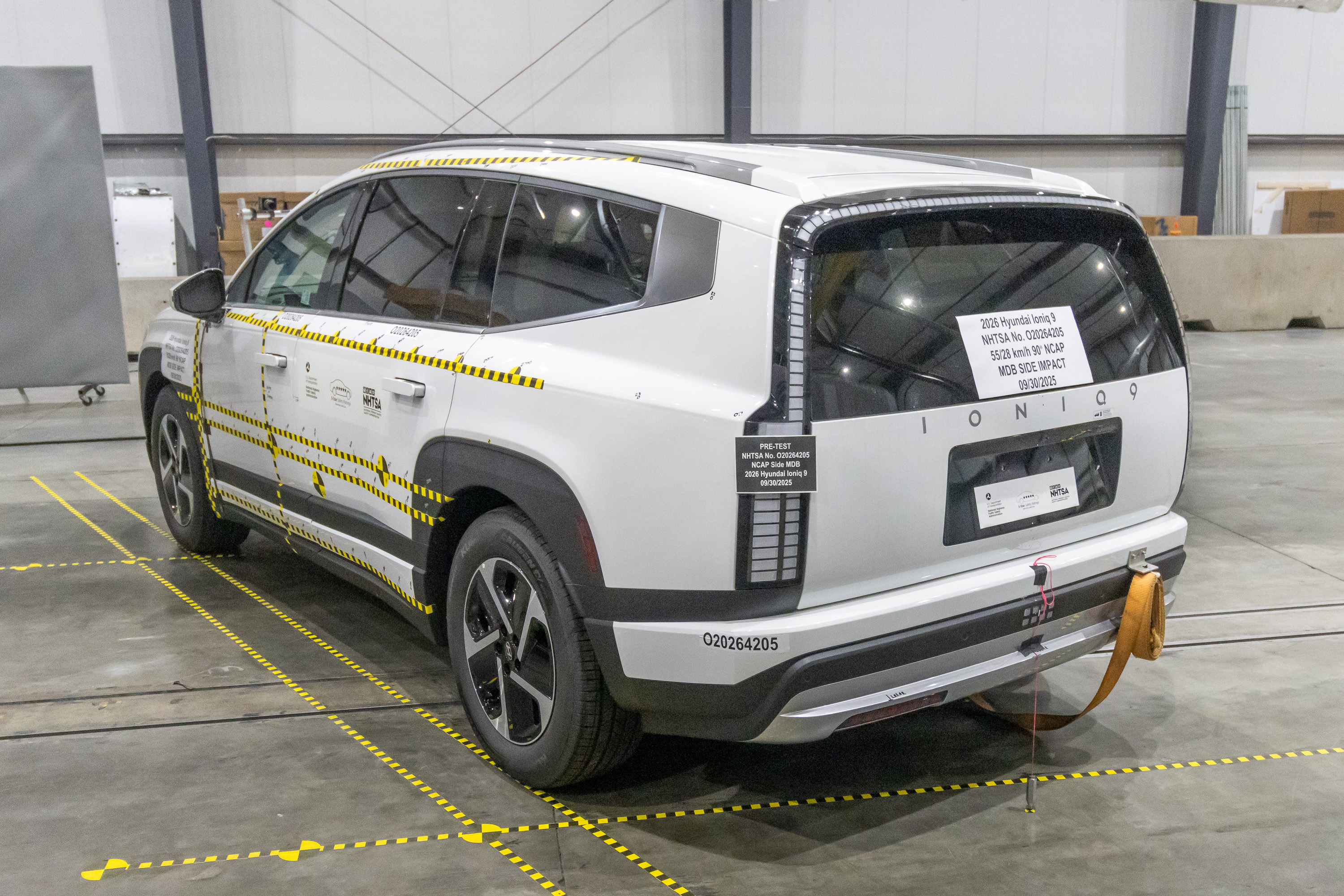
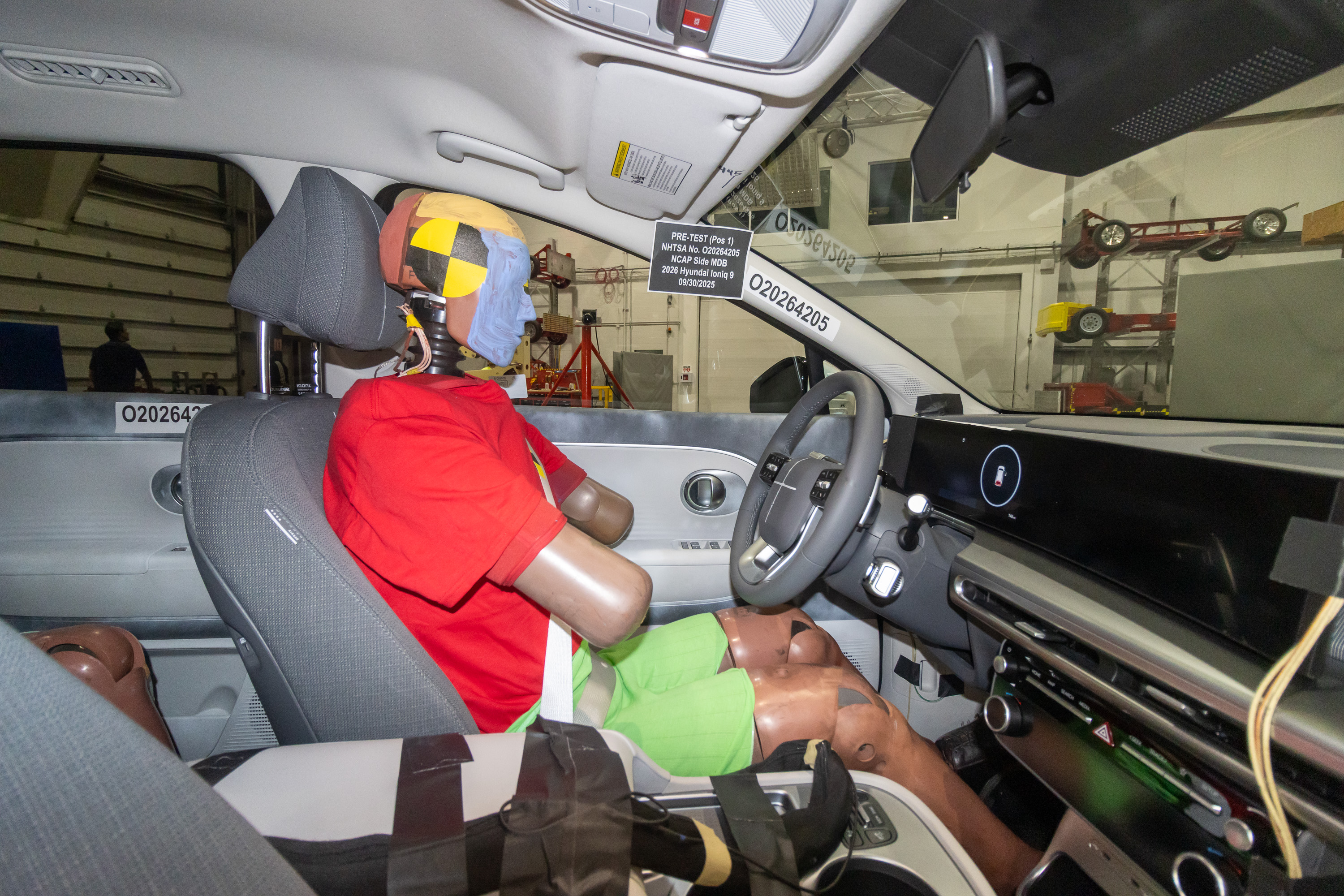


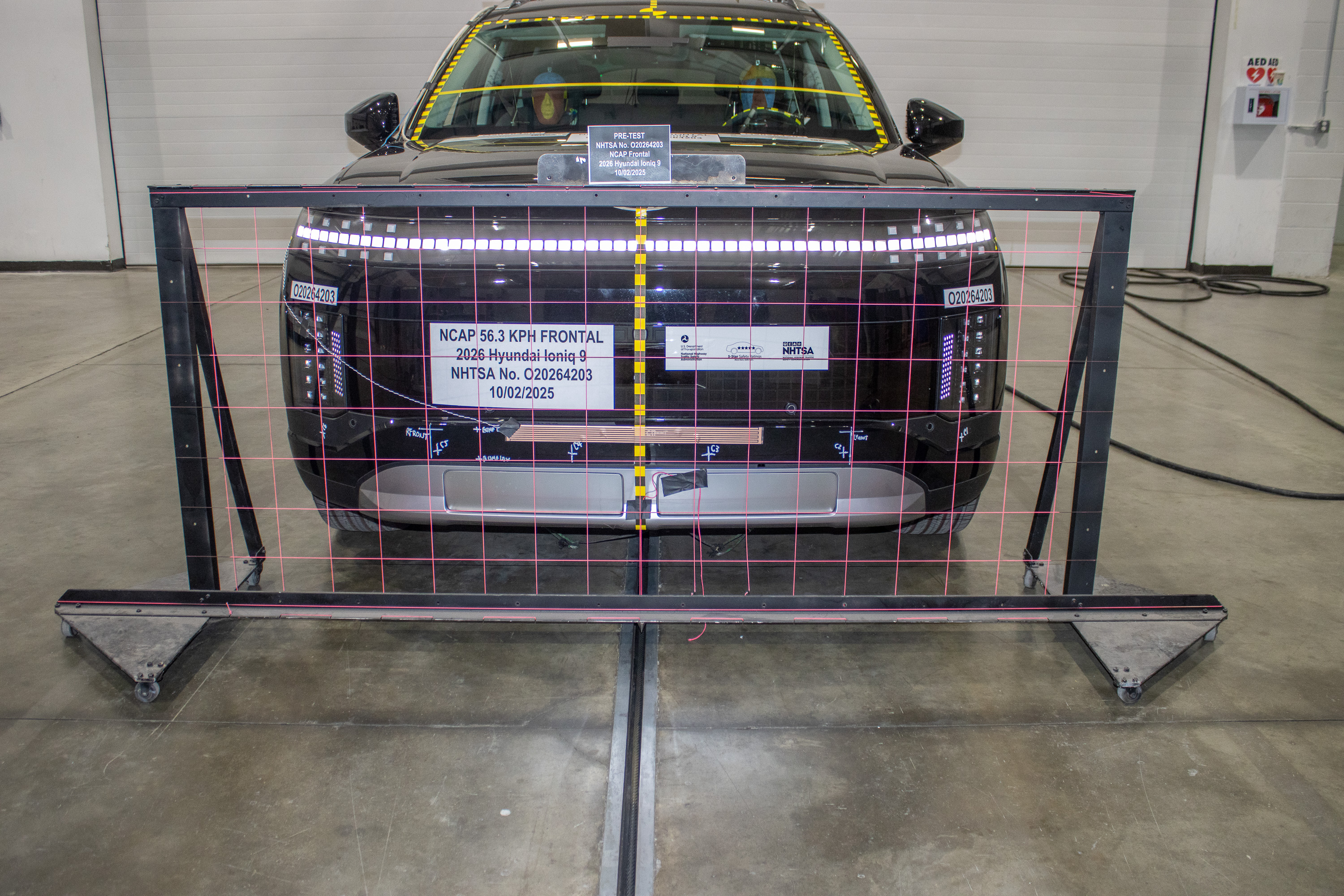
Crash test #3NHTSA test 15519
Full test report (PDF) ↗Crash-test footage is converted for smooth playback the first time someone requests it — usually under a minute.
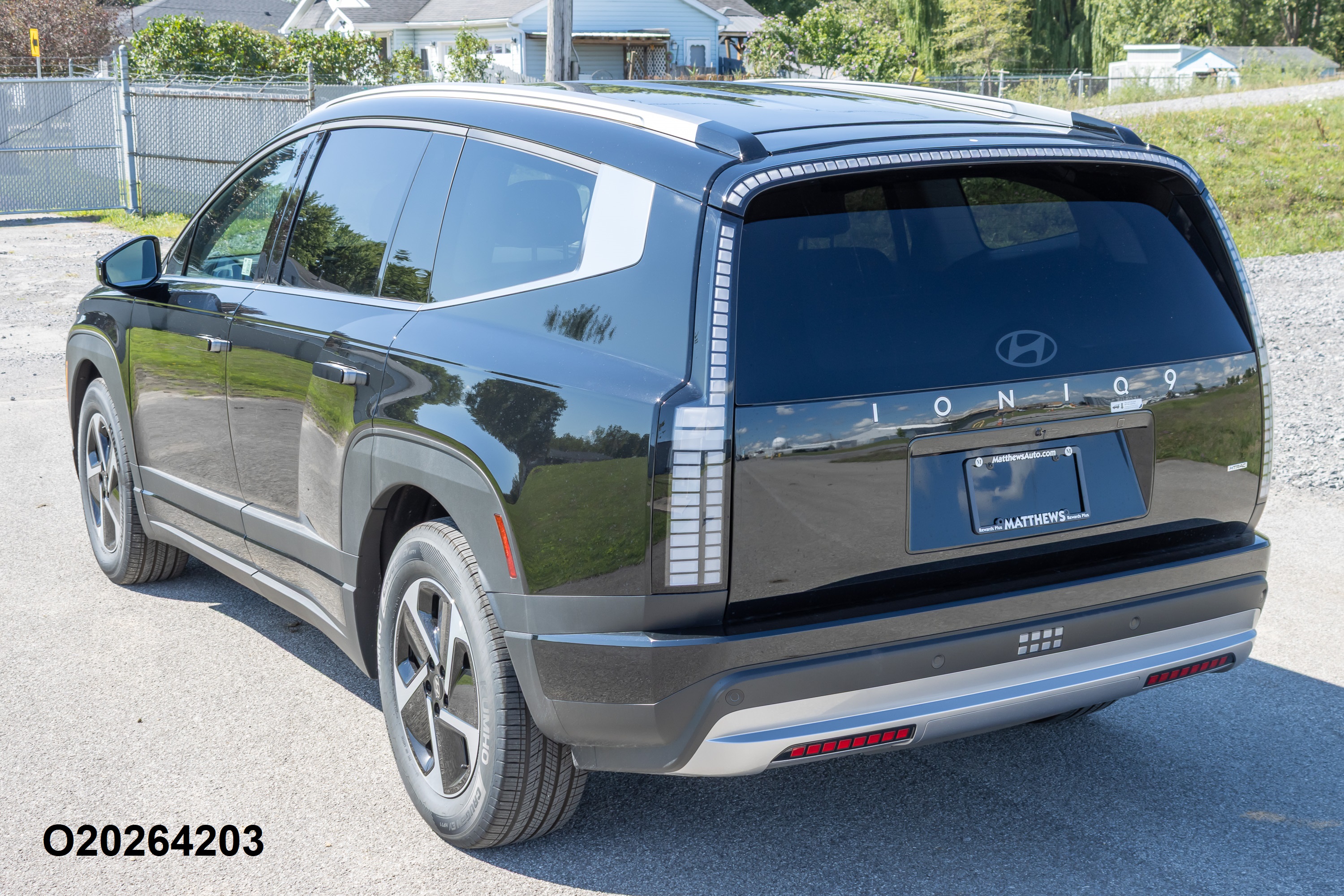
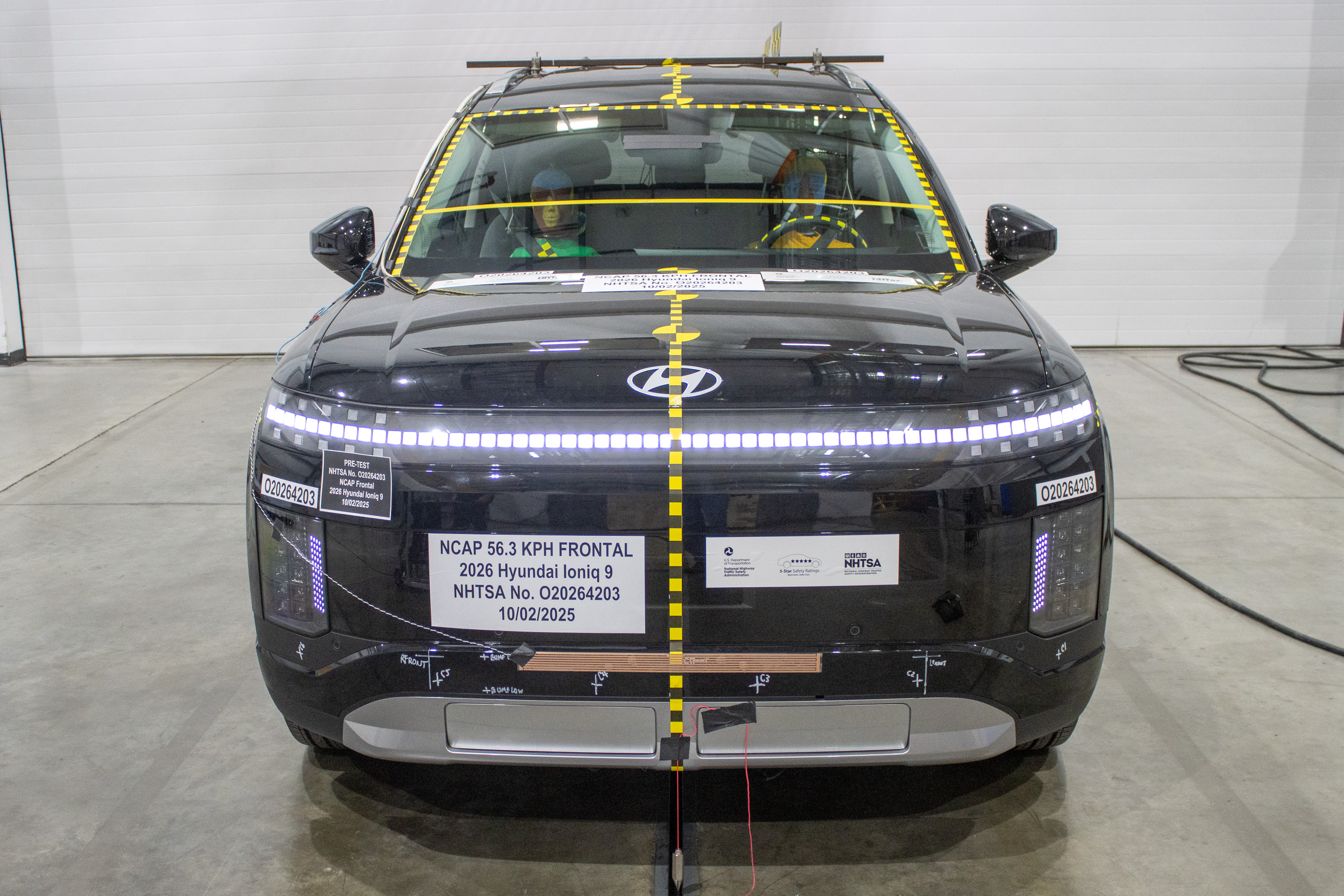
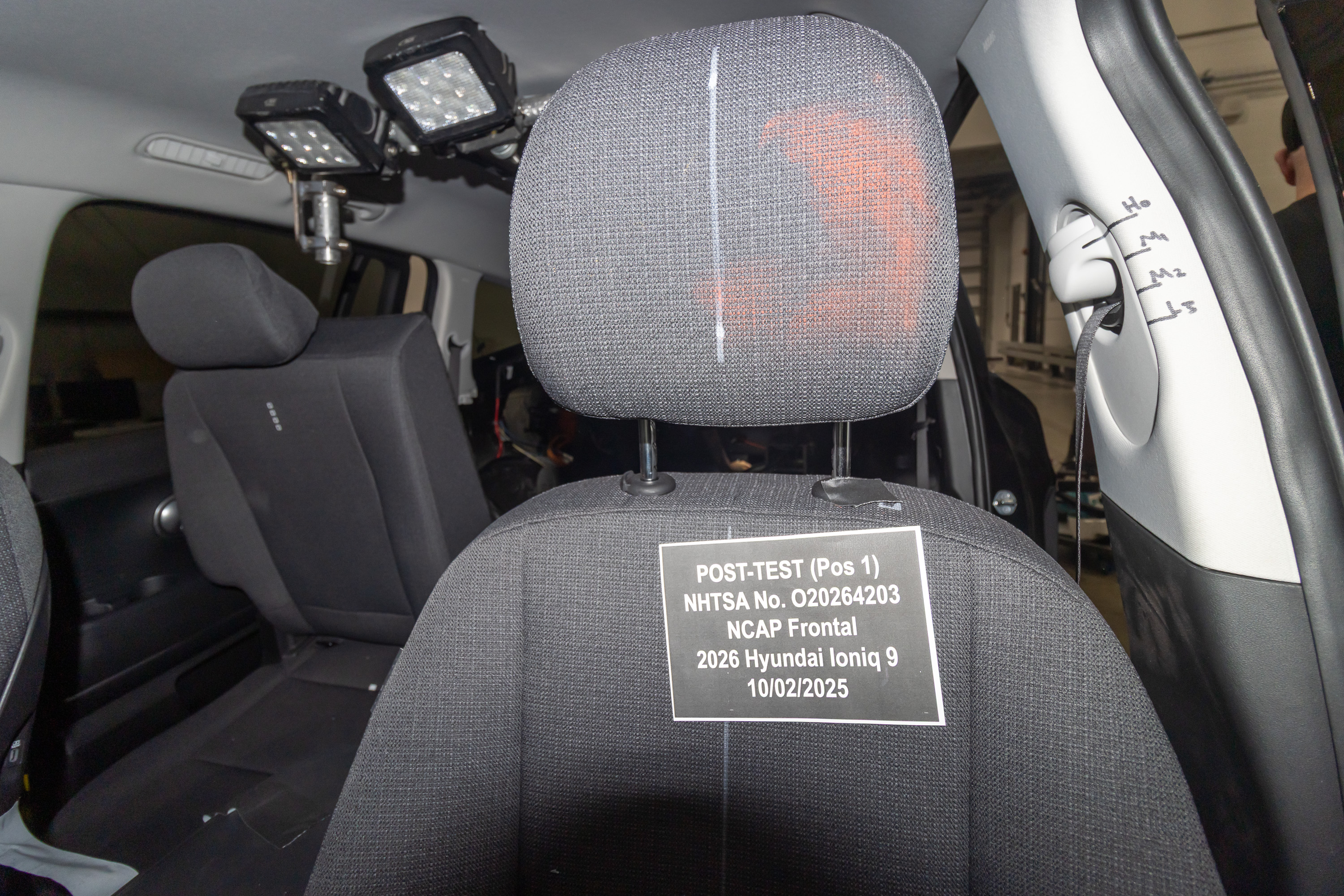
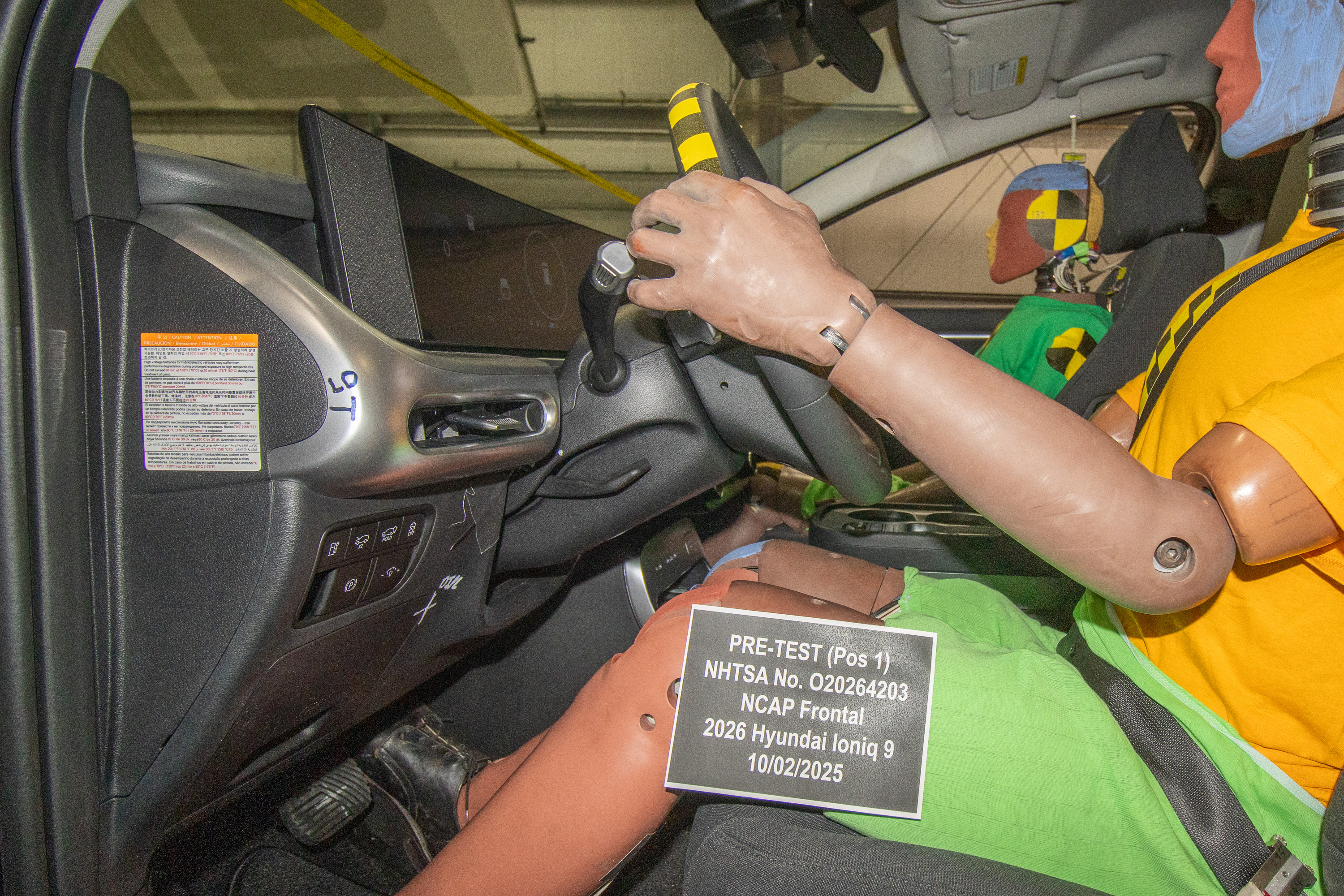
Recalls (2)
- SUSPENSION:CRITICAL FASTENERSCampaign 26V314000 · 19/05/2026
Hyundai Motor America (Hyundai) is recalling certain 2025 Ioniq 5 and 2026 Ioniq 9 vehicles. The fasteners for the rear suspension may loosen and detach, which can result in a loss of vehicle control.
Risk: A loss of vehicle control increases the risk of a crash.
Fix: Dealers will inspect and replace the rear suspension fasteners and perform a rear vehicle alignment, as necessary, free of charge. Owner notification letters are expected to be mailed July 17, 2026. Owners may contact Hyundai customer service at 1-855-371-9460. Hyundai's number for this recall is 303. Vehicle Identification Numbers (VINs) involved in this recall became searchable on NHTSA.gov on May 20, 2026.
- ELECTRICAL SYSTEM:PROPULSION SYSTEM:TRACTION BATTERYCampaign 26V068000 · 06/02/2026
Hyundai Motor America (Hyundai) is recalling certain 2025-2026 IONIQ 5 and 2026 IONIQ 9 vehicles. The high voltage battery system may contain an improperly tightened bus bar, which can cause a short-circuit.
Risk: An electrical short in the high voltage battery system increases the risk of a fire.
Fix: Dealers will inspect and tighten the bus bar retention bolts and replace the battery system assembly, as necessary, free of charge. Owner notification letters were mailed April 3, 2026. Owners may contact Hyundai customer service at 1-855-371-9460. Hyundai's number for this recall is 294. Vehicle Identification Numbers (VINs) involved in this recall became searchable on NHTSA.gov on February 7, 2026.
Owner complaints
Most-reported areas
- ELECTRICAL SYSTEM20
- FUEL/PROPULSION SYSTEM9
- POWER TRAIN6
- FORWARD COLLISION AVOIDANCE5
- VEHICLE SPEED CONTROL4
- LANE DEPARTURE2
- ENGINE2
- UNKNOWN OR OTHER2
Read individual complaints (33 most recent)
These are unverified consumer reports filed with NHTSA, shown as submitted.
- 12/16/2025· POWER TRAIN,FUEL/PROPULSION SYSTEM,LANE DEPARTURE
While driving on the freeway utilizing Highway Drive Assist, I suddenly received a warning on the heads up display stating that assisted systems were unavailable, at which point the Adaptive Cruise Control & Lake Keep Assist both deactivated. I pressed the button on the steering wheel to reactive the system and received "conditions not met" error. At this point, I placed my foot on the accelerator and it was completely unresponsive. I stabbed at hte accelerator as well as held it down without issue. Regenerative breaking also did not reactive. Fortunately, I had enough momentum to change lanes safely to the shoulder and power cycle the car. I took the car to my local dealership who did a brief test drive and could not recreate, returning the car to me without contacting Hyundai proper, and recommending I call them directly myself.
- 11/18/2025· SERVICE BRAKES
When my Ioniq 9 was in reverse, the brake did not work. The car kept rolling and I had to turn it off to stop the car.
- 09/24/2025· FORWARD COLLISION AVOIDANCE,LANE DEPARTURE
Occasionally while driving my IONIQ 9 in sunny conditions with glasses on while utilizing Lane Keep Assist and the Adaptive Cruise Control system the car flashes a Warning about keeping your attention on the road, and then continues on beeping and chiming before ultimately completely stopping in the middle of the road unless you disengage the Lane Keeping Assist and Adaptive Cruise Control. I believe the sensors on top of the Steering Wheel aren’t calibrated that great for people who wear glasses, as this issue does not occur when I take my glasses off. I am not in any way obstructing the sensors, and in all cases when this has occurred, my attention is on driving and the fact that the vehicle begins to decelerate into a complete stop while in the middle of traffic is terrifying. This has happened to me about 3 times now since getting the car and all 3 times it was while I was wearing my regular glasses. When I have my sunglasses on I haven’t experienced the issue.
- 08/30/2026· TIRES
When reaching speeds of approximately 55 to 60 mph, the car would begin to shake and the steering wheel would excessively begin shaking. You did not feel like you had great control of the car. The front two tires required replacing due to the foam being detached/mangled within the tires. The dealership put the new tires onto the back of the car and rotated the original back tires to the front of the car as part of the repair/replacement.
- 08/20/2026· Other/I am not sure
We bought two of these car seats and the base on account we liked the feature that the car seat can rotate in the base... This car seat is UNUSUALLY UPRIGHT on its own and I believe the base insert makes it worse. I am a first time mom and I didn't realize how bad the ergonomics of this car seat are until recently, but my baby absolutely HATES the car now because she associates it with how uncomfortable this car seat is. I cannot stress the emotional distress this car seat has caused me and my baby. Any product like this should not be on the market
- 08/19/2026· FUEL/PROPULSION SYSTEM,FORWARD COLLISION AVOIDANCE
I am reporting serious repeated safety failures with my 2026 Hyundai IONIQ 9 involving unintended emergency braking and sudden loss of propulsion. While traveling approximately 70–75 mph northbound on I-15, the vehicle suddenly displayed an emergency braking warning and aggressively slowed despite no apparent obstacle or traffic condition requiring emergency braking. Before I could regain control, the vehicle came to a complete stop in active freeway traffic with vehicles around and behind me, creating an extreme risk of a high-speed rear-end collision. Something similar has happened on two other occasions. On a separate occasion while traveling on I-40, the vehicle again unexpectedly initiated emergency braking. I was able to disengage adaptive cruise control and regain control before the vehicle came to a complete stop. The vehicle has also experienced two separate loss-of-propulsion incidents. During one, the vehicle suddenly limited its maximum speed to approximately 22 mph and would not accelerate normally for approximately four miles before returning to normal operation without explanation. During another incident, the vehicle suddenly would not exceed approximately 40 mph. I safely pulled over, but once stopped the vehicle would not accelerate from 0 mph, leaving me unable to re-enter traffic. Normal operation returned only after shutting the vehicle off and restarting it. The Hyundai dealership has inspected the vehicle 3 times and has had it for more than 3 weeks, but states it cannot replicate the conditions. These failures are intermittent but have occurred repeatedly and involve critical braking and propulsion systems. I am concerned another event could cause serious injury or death, particularly if the vehicle brakes unexpectedly at freeway speed or loses propulsion while merging or crossing traffic. I am requesting NHTSA investigate this potential safety defect.
- 08/15/2026· FUEL/PROPULSION SYSTEM
On XXX I had two warnings pop up on the car to check electric vehicle system while driving. The car was still driving fine, so I took it into the dealer (ALM Hyundai in [XXX]) within a few days to have general maintenance and for the DTCs to be reviewed. The EV tech was 2 weeks out, so they just briefly reviewed the code and said it was safe to drive. Everything was fine until XXX. I fully charged the vehicle overnight on XXX. Around 11:30 a.m. on XXX I went to drive the car. This was the 3rd time I had driven it since charging it and was about 2 minutes into the drive when the check electric vehicle system light came on again and the car started losing power and accelerating on its own. It cycled this way at a few times and I quickly pulled over into a parking lot as the car was crawling. I turned the car off and back on and returned to my office. I was not able to get it towed to the Hyundai dealership until XXX. When I turned the car on in the morning of XXX, the light had disappeared and I never received an alert within the app that the code appeared in the car. Thankfully my young children were not in the car with me at the time and I was not on a highway or this could have been a serious accident. The car is still within diagnostics, but the last update that I received on XXX the service department stated that they had not been able to duplicate the issue or code. When I dropped the car off, they told me that they could not repair it if they could not duplicate the code. If they cannot find an issue and the fact that the car did not record the code makes this a serious safety hazard not only to anyone driving the vehicle, but other vehicles on the around driving around it. INFORMATION REDACTED PURSUANT TO THE FREEDOM OF INFORMATION ACT (FOIA), 5 U.S.C. 552(B)(6)
- 08/11/2026· POWER TRAIN,ELECTRICAL SYSTEM,ENGINE
Driving on a public road with a 50 phone speed limit, I received an error message on my dash stating electrical failure, and then the car shut down and began to coast, I had use all my strength to turn the car towards the curb and coasted to a stop. I received an error message from multiple components and then the dash went blank.
- 08/06/2026· ELECTRICAL SYSTEM,FUEL/PROPULSION SYSTEM
On 8/3/26 my Ioniq 9 had a warning message to Check the Electrical System, but provided no additional information. I was able to drive the car home, anticipating that I be able to take it in to the Hyundai dealer where i purchased the vehicle. It should be noted that the car went into limp mode (max 25 mph) for the final six miles to my home. I researched the issue on line and determined that it was possible to get the car to the dealer based upon the experience of other Hyundai owners. Note: There was no information in Hyundai documentation as to the range i could expect once receiving the error message. The morning that I took the car to the dealer, the car started normally but within 1/2 mile it went into limp mode again and within 100 feet went into 'turtle mode" 2-3 mph and came to an abrupt stop. I was at the side of the road and put the hazardous flashers on (which remained on for only a matter of minutes before going dead). The vehicle was then totally dead with no emergency flashers on a busy street). I had the vehicle towed to the dealer which was returned later in the day noting that "the 12 v battery had been recharged and subjected to load and GDS diagnostics, both passed. ICCU inspection confirmed no faults, no parasitic current draw detected, ECR reset performed". Got the car home and the very next morning received a code indicating that electrical service was required. Took the car back into the dealer and have just been informed that the ICCU is being replaced. Safety concerns: lack of documentation and information from mfr, a dead vehicle on a well-travelled road with no functioning safety hazard flashers. Luckily the event occurred during daylight hours and not during the nighttime hours.
- 07/27/2026· WHEELS
I am submitting this complaint regarding a suspected manufacturing defect involving an original equipment Hankook iON evo AS tire installed on my 2026 Hyundai IONIQ 9. At approximately 8,000 miles, and with the vehicle only six months old, the tire developed a severe vibration that increased with vehicle speed, becoming most noticeable above approximately 55 mph. The vibration became progressively worse, raising concerns about the safe operation of the vehicle. A Hyundai dealership inspected the vehicle and determined that the sound-deadening foam attached to the inside of the tire had separated from the tire carcass. The detached foam caused the tire to become significantly out of balance. The tire required replacement. This was not the result of a road hazard, impact, puncture, or normal tire wear. The tire had been used under normal driving conditions and had accumulated only approximately 8,000 miles. Because the vehicle could not be safely driven until repaired, I was required to rent another vehicle while awaiting the repair. Hyundai denied reimbursement for the rental expense because tires are covered under the tire manufacturer's warranty rather than the vehicle warranty. I am concerned that separation of the internal foam on original equipment Hankook iON evo AS tires may represent a manufacturing defect that could affect other vehicles equipped with these tires. A severe imbalance at highway speeds could create a significant safety hazard by impairing vehicle control or distracting the driver. I respectfully request that NHTSA review this issue and determine whether similar failures have been reported and whether further investigation is warranted.
- 07/22/2026· ELECTRICAL SYSTEM
An Integrated Charging Control Unit (ICCU) failure halts the vehicle’s ability to charge and power the 12-volt battery. When it fails, the car can no longer keep the 12V battery charged. This drains the 12V system, potentially causing a sudden loss of motive power while driving or a "bricked" car that won't start. The presents a safety problem because it happened while I was driving and the car slowed down to a halt in a high speed traffic area. This is a well known issue with Hyundais and Kias that share the same EV platform. The car was towed to the dealer on 7/21/2026 and was confirmed as an ICCU issue after diagnostics.
- 07/14/2026· ELECTRICAL SYSTEM
ICCU failure. Warning lights came on in the dash and diagnostic codes were available in my Hyundai app. My family and I had just gotten back from a road trip and if the ICCU would have failed while we were on the trip we would have been stranded and it would have been during the heat wave. The vehicle is currently in the service department waiting for the part to come in.
- 06/27/2025· ELECTRICAL SYSTEM
My ICCU failed, which caused a fuse to blow and some electrical wiring in the car to melt. This caused the car to completely deplete the 12V battery, which left the car completely inoperable. The vehicle was towed to a Hyundai dealership, where they ordered the relevant parts and changed them under warranty. I was without the car for roughly two weeks.
- 06/26/2026· POWER TRAIN,ELECTRICAL SYSTEM
My 2026 Hyundai Ioniq 9 (Performance Calligraphy AWD), leased new in late April 2026 from Team Hyundai of Bend, OR, suffered an Integrated Charging Control Unit (ICCU) failure at approximately 1500 miles in late June 2026, roughly two months into ownership. The failure progressed over several days. First, at a ChargePoint Level 2 (AC) station, the vehicle repeatedly displayed "charging started" every few minutes in a continuous start/stop/retry loop. Within days, AC charging failed completely: the vehicle reported "charging unsuccessful" on two separate EVSEs (a hardwired Level 2 charger and the Hyundai portable charger) across two different circuits. DC fast charging still worked. No other dashboard warnings were displayed. The dealer diagnosed a failed ICCU and replaced the unit. The vehicle was out of service for approximately 2 days thanks to the dealership's great service team. Luckily we were not out on a road trip which we have planned in the next 2 weeks which would have left us stranded with a newborn. This is a documented, ongoing safety defect across Hyundai, Kia, and Genesis E-GMP vehicles. ICCU failure can cause the 12-volt battery to stop charging, leading to reduced power or sudden loss of motive power while driving, which creates a crash risk. NHTSA previously opened an Office of Defects Investigation into this issue, and Hyundai issued recalls 24V204 and 24V868 to address it. What makes this report significant: the 2026 Ioniq 9 uses the second-generation ICCU that Hyundai represents as containing the corrective hardware changes. My failure occurred on this redesigned part, on a vehicle barely two months old, which indicates the underlying defect has not been resolved in current-production vehicles. This is the family's primary vehicle and we have a newborn at home, so the loss of use was a significant hardship. I am filing so this second-generation ICCU failure is on the record and counts toward any future investigation or recall action.
- 06/21/2026· FORWARD COLLISION AVOIDANCE
I was driving at 35 mph speed on a straight road and the car automatically activated emergency steering and pushed towards right I had to jerk the steering towards left to prevent any accidents. No adverse event occurred however this was unnerving experience.
- 06/21/2026· ELECTRICAL SYSTEM,STRUCTURE
The motorized flush door handles lack an automatic anti-pinch resistance sensor when retracting. If an object, hand, or child’s finger is caught inside the door handle while the vehicle locks, the motor continues to force the handle shut. This creates a severe crushing and entrapment hazard. This is available for inspection upon request. My child’s finger got caught in the door handle while the vehicle was locking. There have also been several near miss incidents. The problem has been reported to my local dealership where I purchased the vehicle, but they do not appear to take the issue seriously. The issue has not been inspected by the manufacturer, police, insurance representatives, or others. There are no warning lights or messages due to this issue.
- 06/13/2026· ELECTRICAL SYSTEM,UNKNOWN OR OTHER,FUEL/PROPULSION SYSTEM
On XXX, at approximately 2:20 PM, while driving about 30 mph on a suburban road in [XXX], a red battery warning light appeared on the main instrument cluster. I pulled over and contacted Hyundai support. When I attempted to resume driving, the vehicle accelerated sluggishly with noticeably reduced power. I pulled over a second time and parked with the vehicle still powered on. While I was on the phone with Hyundai roadside assistance, a red ‘Stop vehicle and check power supply’ warning message appeared on the dash, and the vehicle completely lost power several minutes later, becoming inoperable. It had to be towed to a Hyundai dealership. Weather was clear and road conditions were normal. There was no crash, fire, or injury. The vehicle had approximately 3,770 miles at the time of failure. As of this report, the dealer has not yet completed diagnosis. The symptoms are consistent with the integrated charging control unit (ICCU) failure pattern widely reported in Hyundai EVs, but this has not yet been confirmed. INFORMATION REDACTED PURSUANT TO THE FREEDOM OF INFORMATION ACT (FOIA), 5 U.S.C. 552(B)(6)
- 06/04/2026· ELECTRICAL SYSTEM
On XXX, my 2025 Hyundai Ioniq 9 displayed a battery fault warning (DTC P1AAF00). I was instructed by Hyundai to bring the vehicle to a dealership immediately as other Ioniq 9 owners had experienced sudden and complete loss of motive power during highway operation. The vehicle has been at Pacifico Hyundai in [XXX] since that date. I was initially told the battery control module required replacement with only 7 units available nationwide. On May 5 I was informed via text that the entire high voltage battery pack requires replacement with no release date provided. The vehicle has been out of service for 48 days with no repair timeline. This fault presents a serious safety risk as sudden loss of power at highway speeds creates an immediate collision hazard for the driver and surrounding vehicles. INFORMATION REDACTED PURSUANT TO THE FREEDOM OF INFORMATION ACT (FOIA), 5 U.S.C. 552(B)(6)
- 06/02/2026· ELECTRICAL SYSTEM,FUEL/PROPULSION SYSTEM
The Integrated Charging Control Unit (ICCU) on this vehicle produces loud whirring noises when charging at 80% or above. This has been documented in writing to the service department. The ICCU defect is a known systemic issue across the Hyundai and Kia EV platform. The vehicle is currently scheduled to return to the dealer for this and other defects. This is the second major service visit on a vehicle leased in March 2026 that was already out of service 28 consecutive days for a sunroof failure.
- 06/02/2026· VEHICLE SPEED CONTROL,FORWARD COLLISION AVOIDANCE
On May 14, 2026, while traveling at highway speed in a clear passing lane with no obstacles present, the autonomous emergency braking system activated without cause and brought the vehicle to a complete stop. A following vehicle nearly rear-ended me. I recorded a voice memo immediately after the incident. A third-party crash detection application on my phone independently logged the hard stop event. A second phantom braking incident has since occurred. The vehicle is a 2026 IONIQ 9 Calligraphy leased in March 2026. This is the second major defect event on this vehicle, which was also out of service 28 consecutive days for a sunroof failure earlier this year. I am aware of ICCU-related systemic defects documented across the Hyundai and Kia EV platform and believe this may be connected.
- 05/21/2026· ELECTRICAL SYSTEM,VEHICLE SPEED CONTROL,UNKNOWN OR OTHER
I was driving on the highway at 70 mph approximately with my young daughter in the backseat. All of a sudden, the front display on my Hyundai Ioniq 9 went completely black and said "no signal." I lost all dashboard information about my speed, gas gauge, horsepower etc. The only thing I could do was see how fast I was going because I was on google maps and my audiovisual screen in the center was still working. I drove 15 min with this to the dealership. The signal never came back. I had the car at the Planet Hyundai for 14 days. They said nothing was wrong and that I should come back when it happens again. It was TERRIFYING having no signal and wondering if my car was going to stop in the middle of the highway. The dealer said that Hyundai would not do anything about it unless it was recreated even though I had pictures of it. What a horrible experience and I am terrified to drive the car now.
- 05/10/2026· ELECTRICAL SYSTEM,VEHICLE SPEED CONTROL,ENGINE
Was driving down the highway when Check: electric vehicle system warning came on and car slowed suddenly and wouldnt go past 41MPH. Within a min, the car slowed down further and just as I was pulling on the shoulder. Car didnt have power to move after.
- 05/01/2026· FORWARD COLLISION AVOIDANCE
On April 23, 2026, while driving my 2026 Hyundai Ioniq 9 , the Automatic Emergency Braking system completely failed to detect an oncoming hazard. The system did not alert me, did not activate, and did not apply emergency braking. I nearly collided with another vehicle as a direct result of this failure. The vehicle has a persistent diagnostic trouble code C28AB87 — CAN time-out for the front radar unit — which disables critical Advanced Driver Assistance Systems including Automatic Emergency Braking, collision avoidance, and Smart/Adaptive Cruise Control. This is the same defect that has been present since early in my lease. The vehicle has been presented for repair at two different Hyundai dealerships on three separate occasions: Attempt 1 — Oxmoor Hyundai, [XXX] , March 19-20, 2026. Defect diagnosed, unable to repair. Attempt 2 — Oxmoor Hyundai, [XXX] , April 1-17, 2026. Front radar unit replaced. Defect remained. Attempt 3 — [XXX] Hyundai, [XXX] , April 23, 2026 to present. Suspected bad connector, part ordered. Vehicle still at dealership. Cumulative days out of service: 24 days and continuing for the same safety defect. I have formally demanded a buyback from Hyundai Motor America under Ohio Lemon Law ORC 1345.72. INFORMATION REDACTED PURSUANT TO THE FREEDOM OF INFORMATION ACT (FOIA), 5 U.S.C. 552(B)(6)
- 04/14/2026· POWER TRAIN,ELECTRICAL SYSTEM
Vehicle was operating perfect then got alert indicating electrical system fault but vehicle still drove (was just 2 miles from home ) but then alarms sounded and just able to pull off road before vehicle died. Checked and see code DTC PIA9096 and car was inoperable after. Towed to dealer for replacement of ICCU module. They acknowledged they have seen this before. I was on a local road, but if this happened on a highway, would have been more hazardous!
- 04/10/2026· POWER TRAIN,ELECTRICAL SYSTEM,FUEL/PROPULSION SYSTEM
Failure of the ICCU during normal driving conditions. The vehicle was controllable, and driver was able to bring the vehicle to a safe location as vehicle performance deteriorated. The failure left the driver and passenger without power during a storm in an unfamiliar area. After about 45 minutes of waiting for roadside assistance, the vehicle lost all auxiliary power and no functions were available (including lights and door lock controls). Vehicle was towed to a local dealership, where issue was diagnosed and part has been replaced. The failure was not preceded by any significant event. Warnings present on the driver's information panel while driving.
- 03/22/2026· ELECTRICAL SYSTEM,FUEL/PROPULSION SYSTEM
Suspected ICCU failure. Progressed rapidly to car being immobile. Known issue not being addressed by Hyundai.
- 03/19/2026· SEAT BELTS,SEATS
Two safety incidents occurred (October and November 2025) involving the power-folding second-row seats. A child was seated in the second-row captain’s chair when a sibling activated the seat from the third row. The seat failed to detect the occupant and continued moving forward, creating a crushing hazard. In one incident, my daughter (approx. 40 lbs, 46 inches tall) was partially trapped and screamed as the seat compressed her and/or tightened the seatbelt. I had to intervene to stop the mechanism. I later tested this myself and confirmed the issue is reproducible. While seated, the seat continued moving forward and pushed me into the front passenger seat without automatically stopping. This demonstrates a failure of occupant detection and/or lack of a safety stop mechanism. This presents a serious injury risk, especially to children. The issue was demonstrated to a dealership representative.
- 03/17/2026· SEATS
The contact owns a 2026 Hyundai Ioniq 9. The contact stated that the second-row seat button caused the seats to fold; however, the button that should have prevented unsafe operation was missing. The contact’s head became lodged between the seat and the vehicle structure, and he sustained head injuries, including prolonged headaches and trauma. No medical attention was provided. There were no warning lights illuminated. The local dealer was not contacted, and the vehicle has not been diagnosed or repaired. The manufacturer was notified, and a case was opened. The failure mileage was approximately 12,000.
- 03/05/2026· ELECTRICAL SYSTEM,FUEL/PROPULSION SYSTEM
The vehicle was being driven on a city street when it suddenly felt sluggish and lost acceleration ability. It would not drive above 43mph in a 50mph zone. The display showed the error "Check electrical vehicle system". After getting home a mile away and turning it on, driving was tested again after about 30 minutes. Upon entering drive mode, it beeps rapidly and displayed "Stop vehicle and check power supply". Battery would not charge, with the vehicle announcing "Charge unsuccessful". The Hyundai app shows an ELECTRIC VEHICLE DTC P1A9096 and DTC Sub System: Air Flap (which appears to be incorrect since the air flap is functional and it's an ICCU failure). The dealer inspected and diagnosed the issue as an ICCU failure, requiring a new ICCU and fuses. Parts are on backorder with availability unknown.
- 02/28/2026· ELECTRICAL SYSTEM
The car’s electrical system failed while I was going at high speeds on the freeway. Red alarm notices popped up on the screen stating “check electric system”. It promptly slowed from 75+ mph to 40 mph on a major highway. My children and I could have been seriously injured. I had to then go across high speed freeway lanes at a slow speed while everyone else is driving 70+ to exit. The dealership is still identifying the issue. On the Hyundai app it shows the error code of P1A9096 which is the same error code on a recall of Ioniq cars from two years ago. It is an ICCU issue in their EV cars that has still not been fixed. There were no warning signs whatsoever. I just got this new 2026 car in September of 2025 - not even 6 months old.
- 01/31/2026· ELECTRICAL SYSTEM
I purchased the car on January 13 2026 the car was dellry to my house that night around 5:50 pm MT two days later my Control Unit (CU) went bad the car went back to the dealership with the first available appointment on the 20th I was told the CU needed to be replace. the car was ready for pick up on the 29th. I received the car at 5:40 pm MT on January 30th around 6:39am MT. I started the car and was going to go to the dealership and less then 2 mins information cam on the dash saying stop vehicle and check power supply. I tired to drive to the dealership but the car would not going pass 24mph and would be unsafe to drive. so I got it towed to the dealership later I was called and told the Integrated Charging Control Unit (ICCU) is often referred to as a critical "brain" or "heart" of the vehicle's power management system is bad and needs to be replace. after that I did research on the ICCU and found on this is a common problem with Hyundai & Kia EV vehicles and increasing at a alarming rate. And would like to request a nationwide research on this issue, and that the ICCU be places as a recall. Thank You
- 01/16/2026· ELECTRICAL SYSTEM
The Integrated Charge Controller Unit (ICCU) failed at 7622 miles, causing the pyrotechnic fuse to fail as well. The vehicle was towed to the nearest Hyundai dealer. Repairs took 2 and 1/2 weeks due to parts availability. My wife, who was driving at the time, could have been stranded. Fortunately, the failure occurred close to our home. The dealer did confirm the fault code and failure of the ICCU and fuse. Warning messages appeared AFTER the failure, not before, including one sent to my phone a day later.
- 01/04/2026· POWER TRAIN,ELECTRICAL SYSTEM,VEHICLE SPEED CONTROL
The vehicle was plugged in overnight. To the set 80% limit. When I got up to leave for work and take family out. The vehicle check electrical system warning ️ came on and the then the vehicle would not drive past 41mph. Then in a few minutes dropped down to 28mph and would not go any further. Took the car to dealership which was miles away and 18 miles per hour was my top speed when I pulled in to the dealership lot. This was one day after I had dropped the car off for a route 7K mile tire rotation and filter change. They claimed they topped off fluids. I keep reading that the ICCU is failing on the Ioniqs and this symptoms seem to match. I am now waiting on diagnosis to be done Tuesday or Wednesday this week of the 5th.